
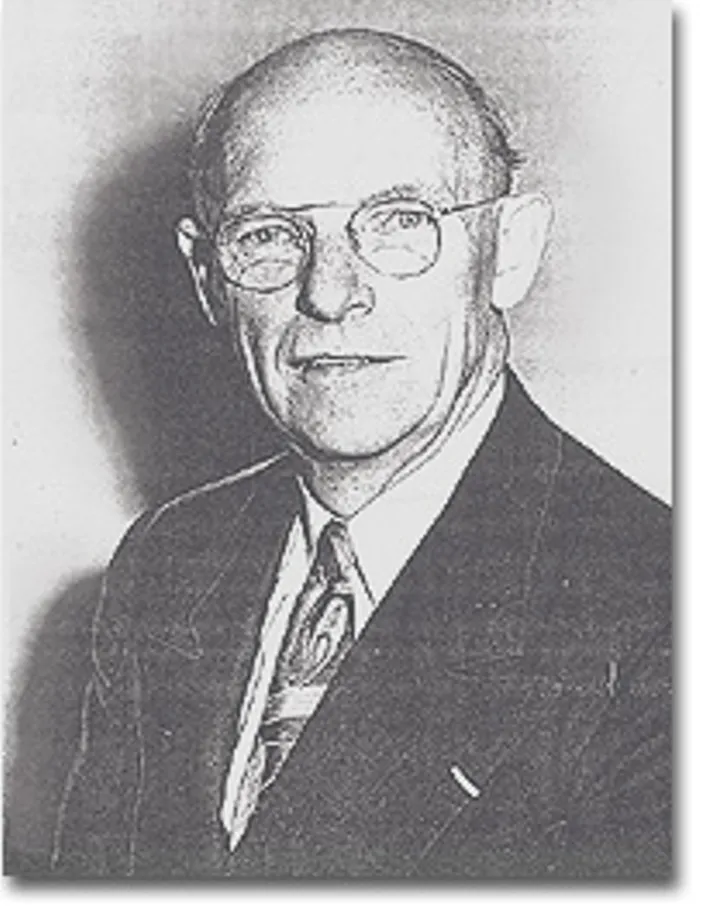
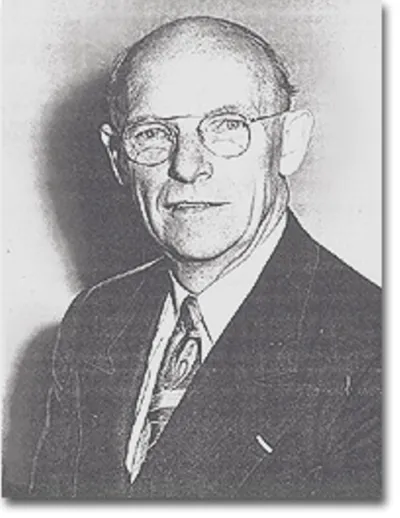
Visitors to the Joy Library at Albany UU may notice the photograph of the person for whom this welcoming space is named: Dr. Charles Rhind Joy (1885–1978). The photograph honors more than a longtime member of our congregation. It represents a life devoted to learning, compassion, and service—a life that connected faith with action and reached far beyond our own community.
Dr. Joy became a member of Albany UU in his later years, and his generosity helped create a lasting resource for generations of members and friends. When he donated his personal book collection, he provided the foundation for the library that now bears his name. Today, the Joy Library continues his commitment to exploration, reflection, and lifelong learning.
That commitment to learning shaped Dr. Joy’s entire life. After graduating from Harvard Divinity School, he was ordained and served as a Unitarian minister in several congregations between 1911 and 1940. His ministry reflected a belief that faith was not only something practiced in worship, but something lived through compassion, curiosity, and service to others.
During World War II, Dr. Joy’s work took on a global dimension. As executive director of the Unitarian Service Committee (USC), he helped lead efforts to assist people fleeing Nazi persecution. From the USC’s headquarters in Lisbon, Portugal, he oversaw a network that helped refugees find safe passage, food, shelter, and protection.
The work of the USC reflected Love put into action. At a time when systems of oppression sought to determine whose lives were valued, Dr. Joy and his colleagues responded by affirming the dignity and humanity of people who were being targeted. Their work was rooted in the belief that caring for others is not limited by borders, nationality, religion, or circumstance.
That commitment was also a commitment to Justice. The USC did not simply recognize suffering; it responded to it. Dr. Joy understood that compassion requires action and that creating a more just world means standing with people who are vulnerable.
During his work with the USC, Dr. Joy also helped create the flaming chalice, a symbol that would eventually become one of the most recognizable symbols of Unitarian Universalism. Created during a time of danger and uncertainty, the chalice came to represent hope, sanctuary, and service. The story of the flaming chalice and its meaning can be explored in our companion blog post.
After his years with the USC, Dr. Joy continued working to deepen understanding among people and cultures. His travels took him to more than 100 countries, and he wrote extensively about religion, philosophy, world affairs, and the people he encountered. Throughout his life, he remained curious about the world and eager to learn from others.
That curiosity reflected a deep sense of connection—the understanding that our lives are shaped by encounters with people whose experiences may be different from our own. Dr. Joy’s work demonstrated Interdependence, showing how relationships across cultures and communities can become sources of understanding and mutual care.
His gift of books to Albany UU was another expression of that same spirit. By sharing his personal collection, Dr. Joy extended his love of learning beyond his own lifetime. His generosity created a resource that continues to invite people to read, question, explore, and discover.
The photograph in the Joy Library reminds us that learning and service are deeply connected. Dr. Joy’s life shows how curiosity can lead to compassion, and how compassion can lead to action.
Through his humanitarian work, his scholarship, and his generosity to Albany UU, Dr. Charles Joy left a legacy that continues to shape our congregation. Each time someone gathers in the Joy Library to read, reflect, or learn something new, they participate in the tradition he helped create: a tradition of seeking understanding and using that understanding to make the world more caring.