
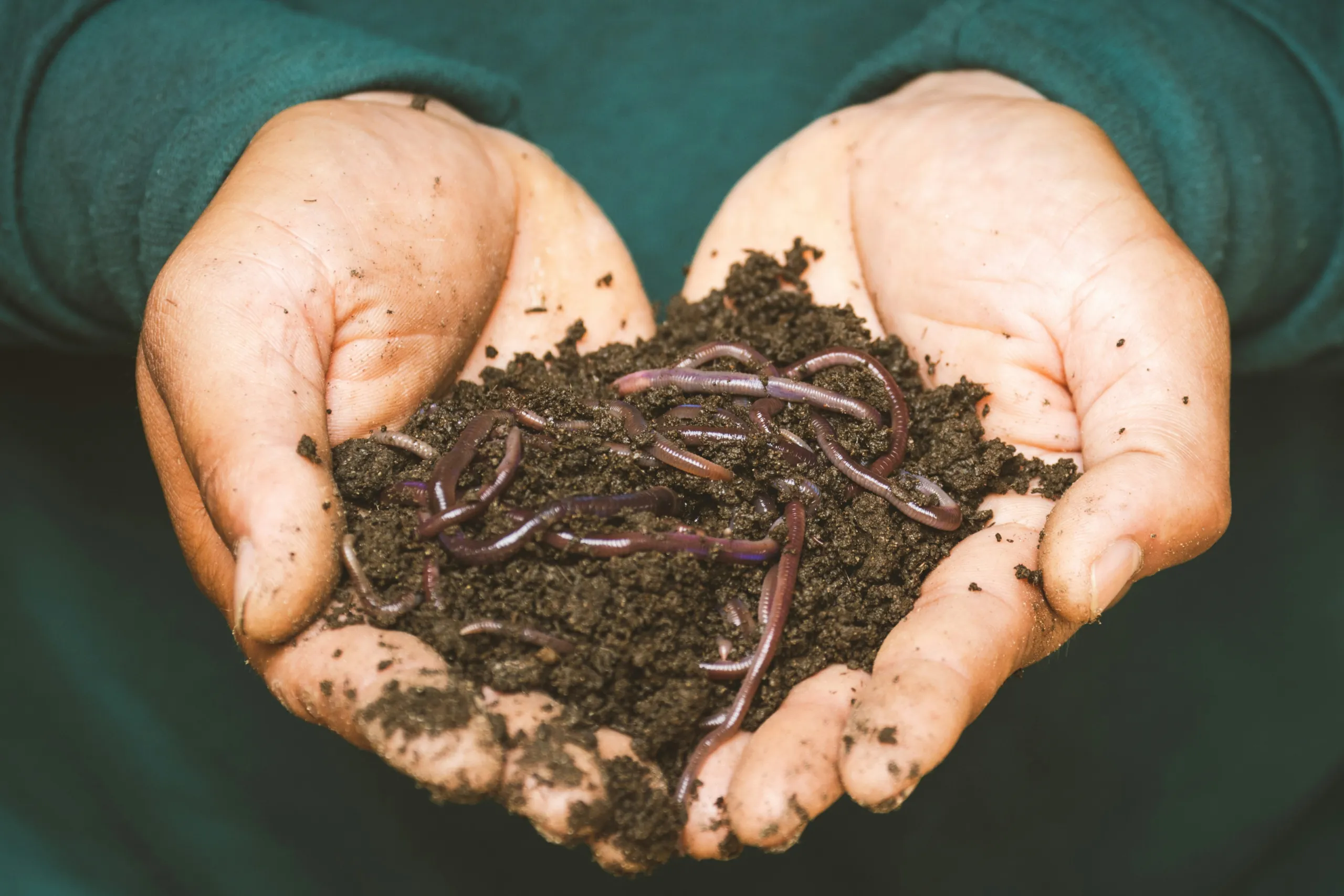
What if some of the hardest-working environmentalists lived in a plastic storage bin?
Red wiggler worms may not be the first creatures that come to mind when we think about climate action, but these remarkable composters quietly transform kitchen scraps into nutrient-rich compost that helps gardens thrive while keeping food waste out of landfills.
Instead of throwing away fruit peels, vegetable scraps, coffee grounds, and other plant-based food waste, a worm composting bin lets nature do what it has done for millions of years. The worms consume organic material and produce castings—one of nature’s richest natural fertilizers—which can be used to nourish houseplants, gardens, and landscapes.
Worm composting is a wonderful example of Interdependence. Rather than thinking of food scraps as garbage, we begin to see them as part of a cycle. Our leftovers become food for worms. The worms create healthy soil. Healthy soil supports new plants, which eventually become food again. What might have become waste instead becomes part of a living system.
It also reflects Transformation. Banana peels, wilted lettuce, and coffee grounds don’t disappear—they become something new. With the help of thousands of tiny partners beneath the bedding, yesterday’s scraps become tomorrow’s gardens.
One of the joys of worm composting is that it doesn’t require a large yard or elaborate equipment. A simple plastic storage bin, shredded newspaper for bedding, and a colony of red wiggler worms are enough to get started. A well-maintained bin has very little odor and can be kept indoors year-round, making it an accessible way for people in apartments and homes alike to reduce household waste.
At Albany UU, members of the Green Sanctuary Team have long encouraged practical ways to care for the Earth. Worm composting reminds us that environmental stewardship doesn’t always begin with large-scale projects. Sometimes it begins with small daily habits—and some very small helpers.
If you’ve ever been curious about starting your own worm bin, we’ve gathered two helpful resources. One explains how to build a simple home worm composting bin, while the other offers practical information about caring for your worms and getting them off to a healthy start. Together, they make it easy to begin turning kitchen scraps into a valuable resource instead of sending them to the landfill.
Sometimes the smallest members of our community can teach us the biggest lessons: that nothing in nature is wasted, that every living thing has a role to play, and that caring for the Earth often begins with simple choices made close to home.