
Albany UU has welcomed new permanent art installations throughout our building, creating opportunities to encounter Native American art, learn from Indigenous artists, and reflect on the histories and traditions their work carries.
The collection features artists from several Indigenous nations, including Onondaga, Mohican, and Abenaki artists. Their work spans contemporary painting, traditional designs, wood carving, and other art forms. Each piece offers a distinct perspective, connecting artistic expression with cultural identity, family stories, spiritual meaning, and the continuity of Indigenous traditions.
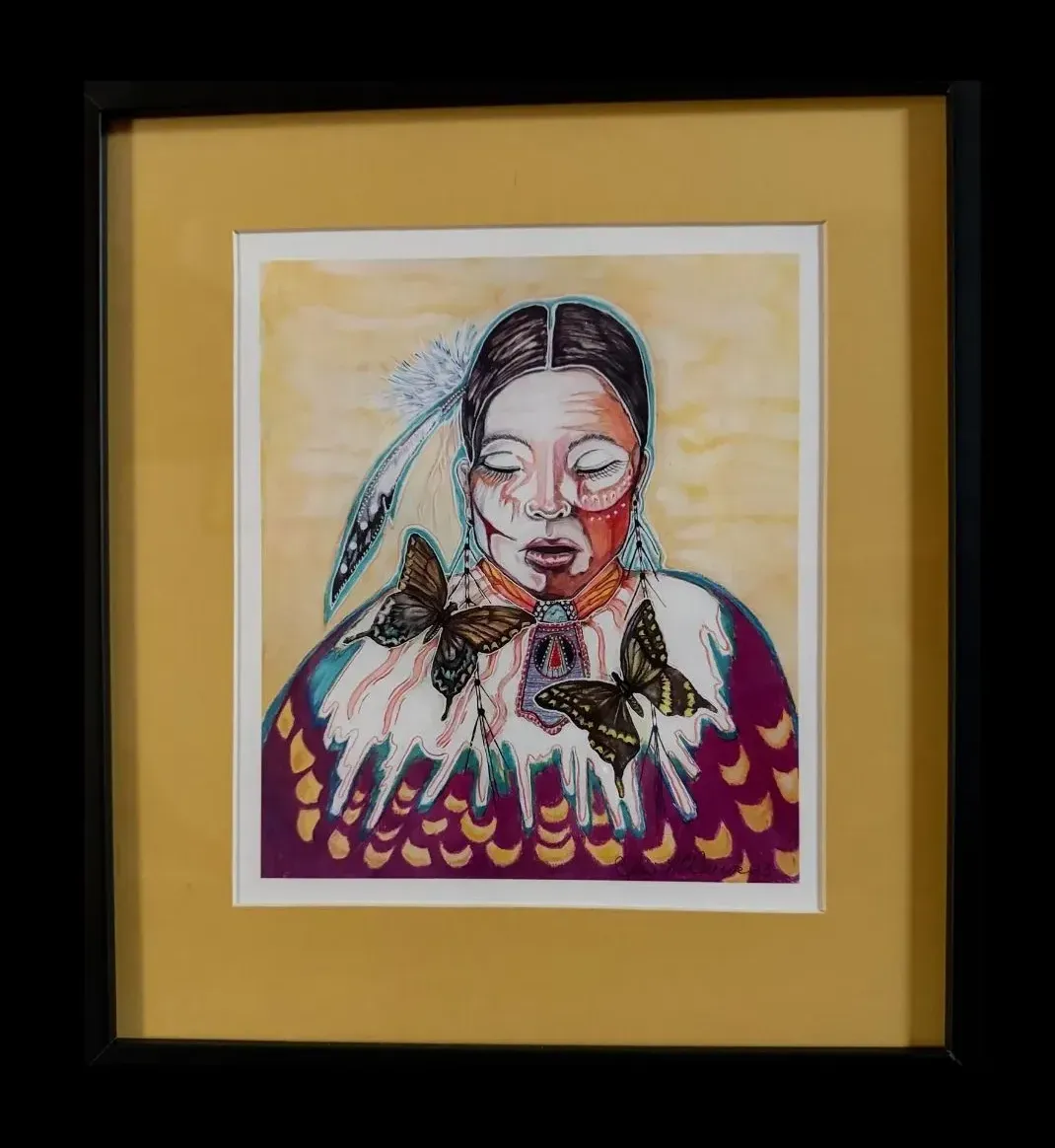
Among the works, Brandon Lazore’s Gayaneñhsä•ʔgo•nah explores Haudenosaunee influence on the formation of the United States and the women’s suffrage movement. Terri L. O’Connor’s Renew My Spirit uses the butterfly to symbolize transformation, spiritual awakening, and the beauty around us. Abenaki artists Liz Charlebois and Fernande Andree’ Dennis Newton share traditional and personal expressions through birch bark bittenwork and wood carving. Gordon Williams, Sr., of the Stockbridge Munsee Band of Mohican Indians, shares work rooted in his community’s traditions, including wampum and sacred plants.
These installations invite us to consider Pluralism, one of our UU values: honoring the many identities, cultures, and perspectives that enrich our shared community. They also remind us of Interdependence, the relationships among people, communities, histories, and the living world.
You’ll find the artwork in three locations throughout the building. Look for the QR codes near the installations to learn more about the artists and the stories behind their work.
The next time you visit Albany UU, take a moment to pause, look closely, and discover something new. Art can open a door to understanding, deepen our connections, and help us practice the curiosity and respect that make our community stronger.
Collection 1: Brandon Lazore
Brandon Lazore (Onondaga)
Brandon Lazore is a multidisciplinary artist and a member of the Snipe Clan of the Onondaga Nation. His work brings together influences from Native artists, classical painters, and graffiti artists in a distinctive style he calls “Traditional Graffiti.”
As a professional painter, Lazore collaborates with universities, historical organizations, and municipalities to bring Haudenosaunee and contemporary Native art into public spaces. He enjoys sharing his work and the stories of his people through projects ranging from large murals to tattoo designs.
Gayaneñhsä•ʔgo•nah
Limited-edition giclée print from the Albany UU Collection
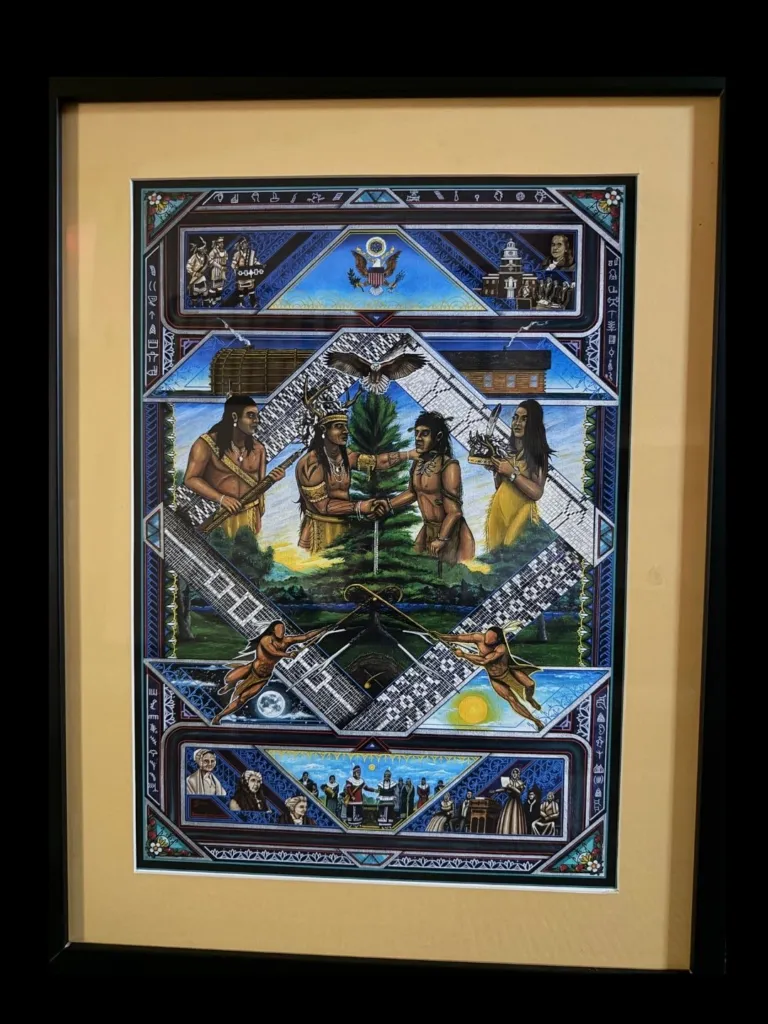
This work explores Haudenosaunee influence on the formation of the United States and the women’s suffrage movement. Its three main sections connect Haudenosaunee leaders, traditions, and symbols with American history. The upper section features Cannasatego, the Seal of the United States, and Benjamin Franklin. The central section traces a transition from a traditional longhouse to a modern one, with the Peacemaker, Tadodaho, Jigonsaseh, and Hiawatha representing the Great Law of Peace. Several wampum belts honor the founders of peace and the traditions they carried forward. The lower section depicts Haudenosaunee women educating American women about their freedoms and status. Lucretia Mott, Elizabeth Cady Stanton, and Matilda Gage appear alongside a scene from the 1848 Seneca Falls Convention. Traditional patterns and symbols from the Condolence Cane complete the composition.
This work explores Haudenosaunee influence on the formation of the United States and the women’s suffrage movement. Its three main sections connect Haudenosaunee leaders, traditions, and symbols with American history.
The upper section features Cannasatego, the Seal of the United States, and Benjamin Franklin. The central section traces a transition from a traditional longhouse to a modern one, with the Peacemaker, Tadodaho, Jigonsaseh, and Hiawatha representing the Great Law of Peace. Several wampum belts honor the founders of peace and the traditions they carried forward.
The lower section depicts Haudenosaunee women educating American women about their freedoms and status. Lucretia Mott, Elizabeth Cady Stanton, and Matilda Gage appear alongside a scene from the 1848 Seneca Falls Convention. Traditional patterns and symbols from the Condolence Cane complete the composition.
Wampum Twist
Giclée print from the Albany UU Collection
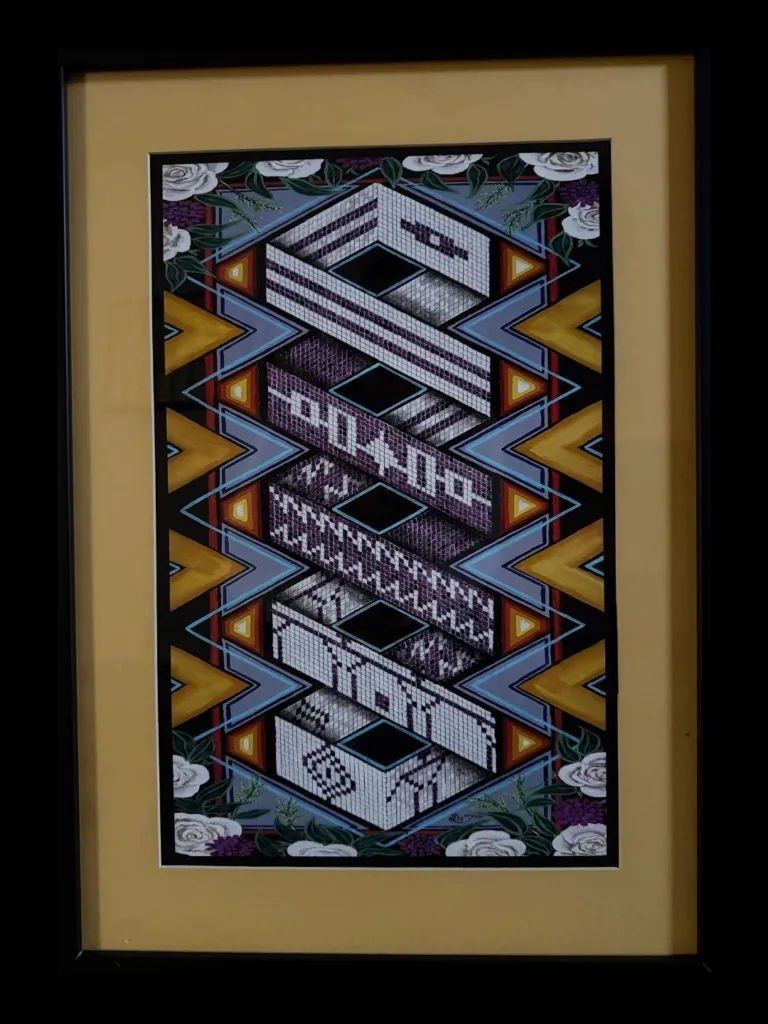
This work brings together several wampum belts, including One Dish, Two Row, Hiawatha, Evergreen Tree, Women’s Nomination, and the Onondaga Friendship Belt. A repeating spike pattern emphasizes the belts’ twisting movement, while floral borders frame the composition. Wampum belts carry meaning within Haudenosaunee history and diplomacy. This work invites viewers to explore the relationships and traditions represented through their designs.
Collection 2: Terri L. O’Connor (Miller), Liz Charlebois, and Fernande Andree’ Dennis Newton
Terri L. O’Connor (Miller) (Mohican)
Terri L. O’Connor (Miller) is an enrolled member of the Stockbridge-Munsee Band of Mohicans in Wisconsin. She spent much of her childhood and early adult life on the Stockbridge Reservation. Her father, an artist, introduced her to oil painting at an early age.
O’Connor describes her art as a reflection of her heritage and a tribute to past Native generations who held on to honor, hope, and survival for future generations.
Renew My Spirit
From the Albany UU Collection
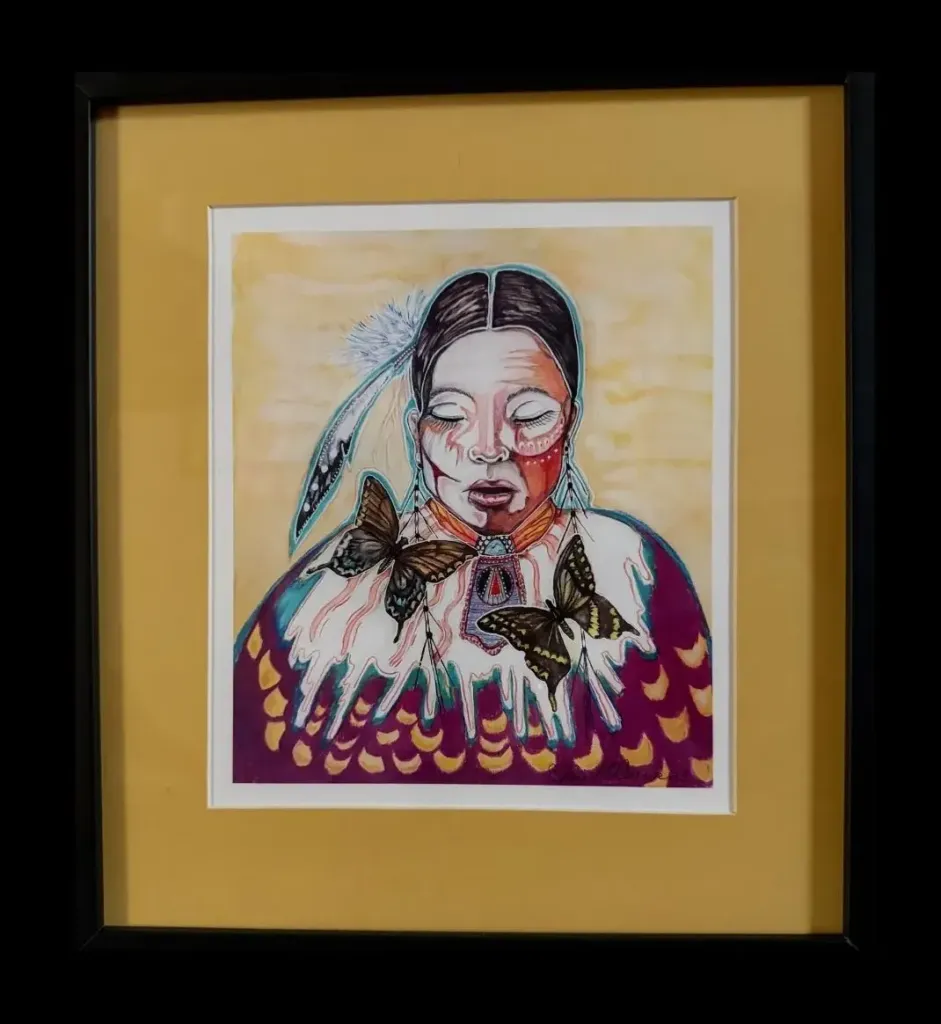
The butterfly represents transformation, beauty, and spiritual awakening. It reminds us to recognize and cherish the beauty around us.
3 Chiefs (The Blanket)
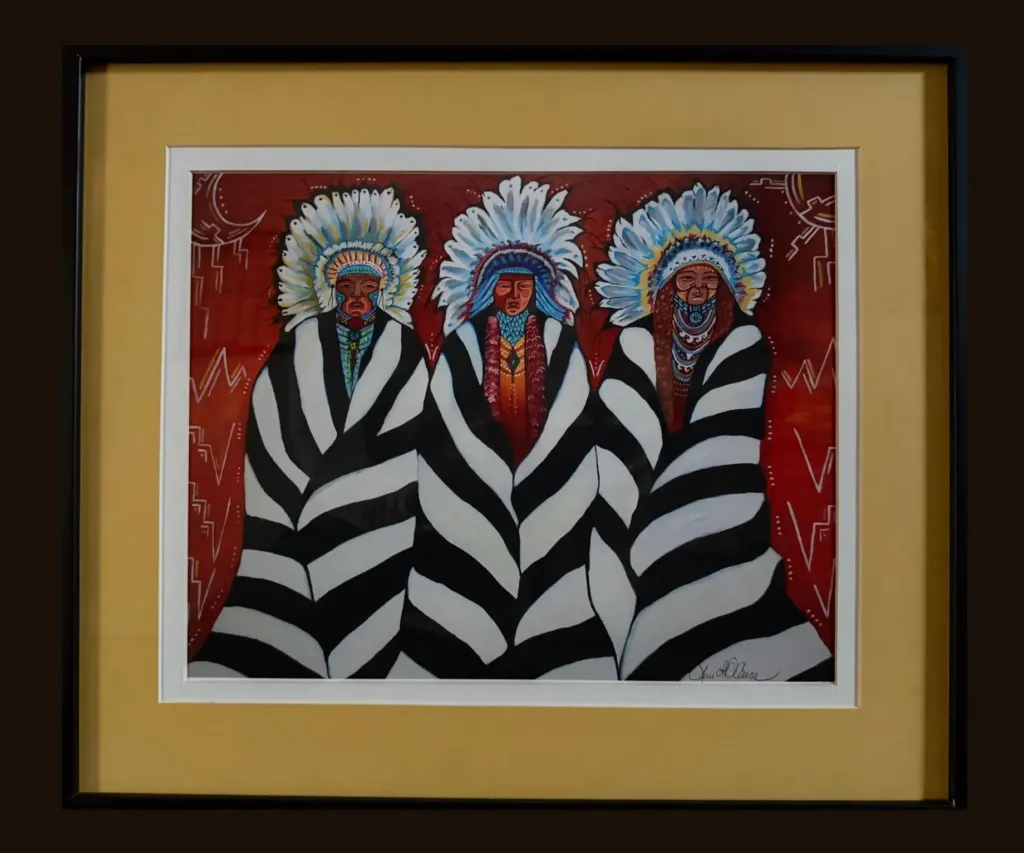
This work draws inspiration from the Navajo blanket and Great Chiefs.
Spotted Eagle
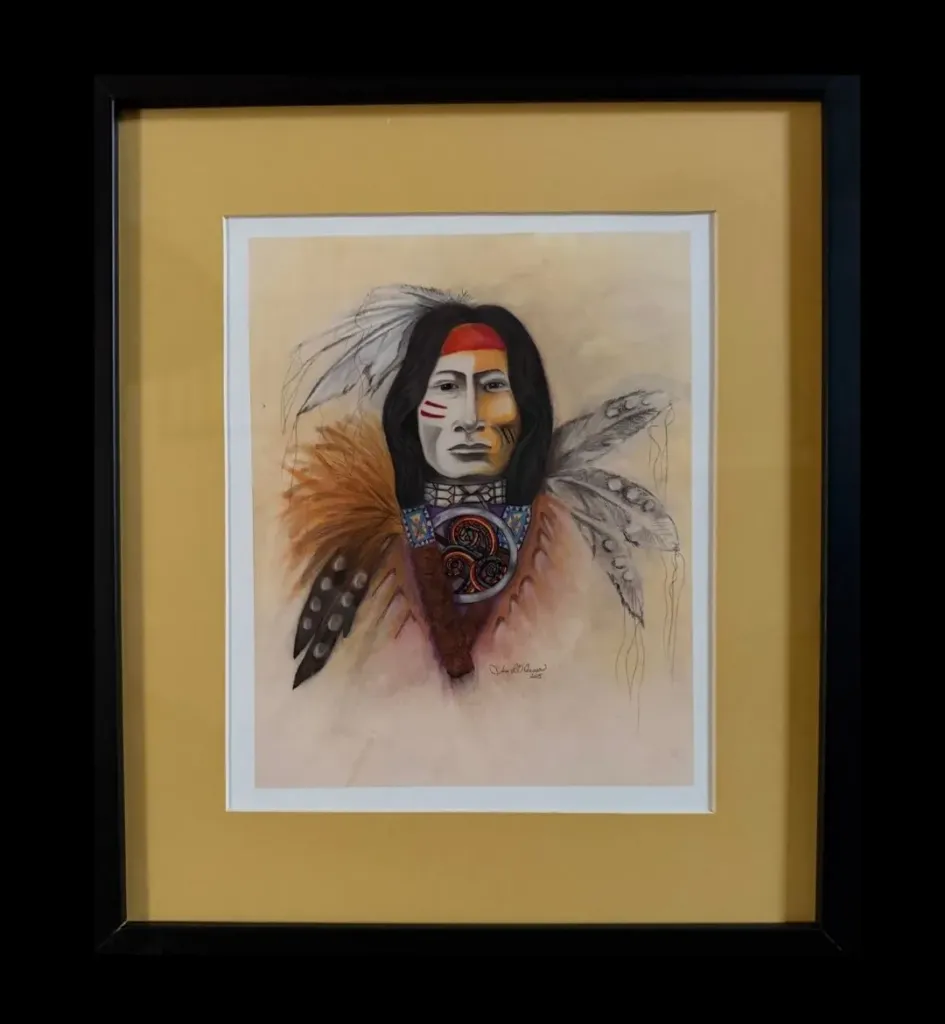
Liz Charlebois (Abenaki)
Birch bark biting is an ancient Indigenous art form practiced for centuries in regions where birch trees grow across North America. Artists fold thin layers of birch bark and use their teeth to create patterns on the surface. When they unfold the bark, a symmetrical design emerges. Artists traditionally used these designs as patterns for beadwork and quillwork. The process requires care and skill, beginning with the selection and preparation of the bark, often gathered in spring.
Birch Bark Bittenwork (Walagaskwadigaw8gan)
Donated to the Albany UU Collection by Dick Dana
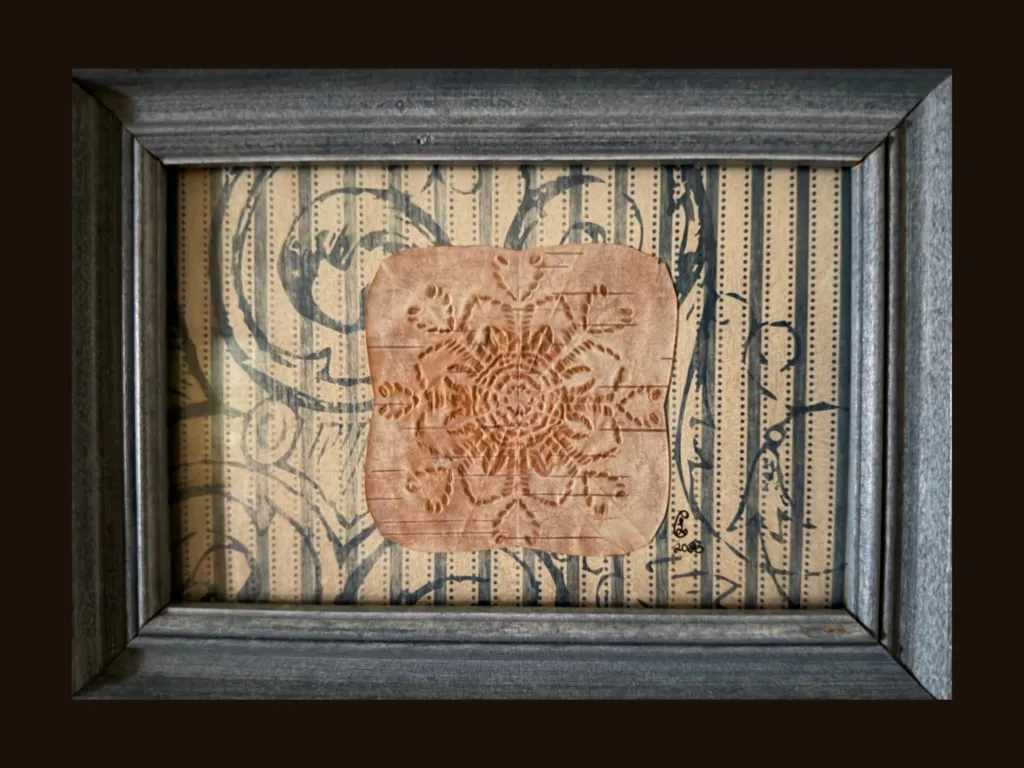
Fernande Andree’ Dennis Newton (Abenaki)
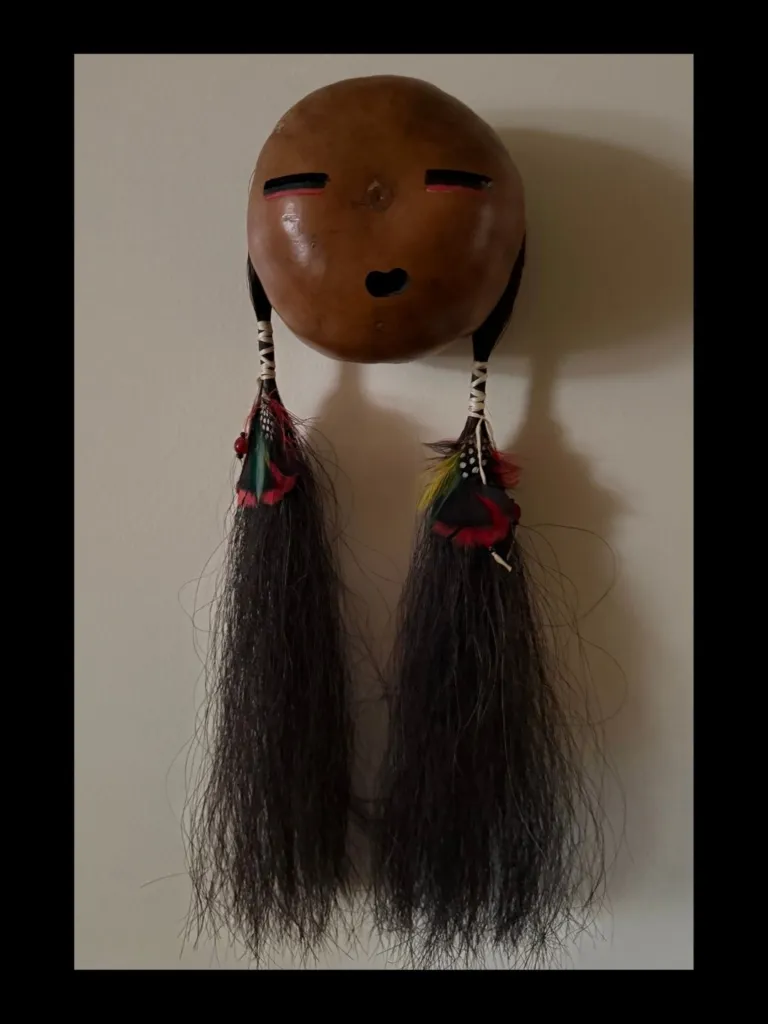
Fernande Andree’ Dennis Newton is an Abenaki artist with roots in the St. Francis Indian Reservation, also known as Odanak, in Quebec, Canada. Her parents both practiced traditional arts. Her father carved wooden figures, masks, and totem poles, and made traditional Abenaki snowshoes and woven pack baskets. Her mother created ash and sweetgrass baskets and sometimes helped design carvings. Newton began wood carving in 1990, two years after her father’s death. Her mother’s encouragement helped her pursue the art, while her father’s guidance continues to inspire her work. In 1998, she began working with hard-shell gourds, creating masks, bells, bowls, jewelry, and imaginative figures. Through wood carving and gourd art, Newton maintains a connection to Abenaki culture and carries forward the stories and artistic traditions her parents shared with her.
The Guardian
Donated to the Albany UU Collection by Vida Wehren
Collection 3: Gordon Williams, Sr.
Woodland Creations: Gii Taa’se Family Artists
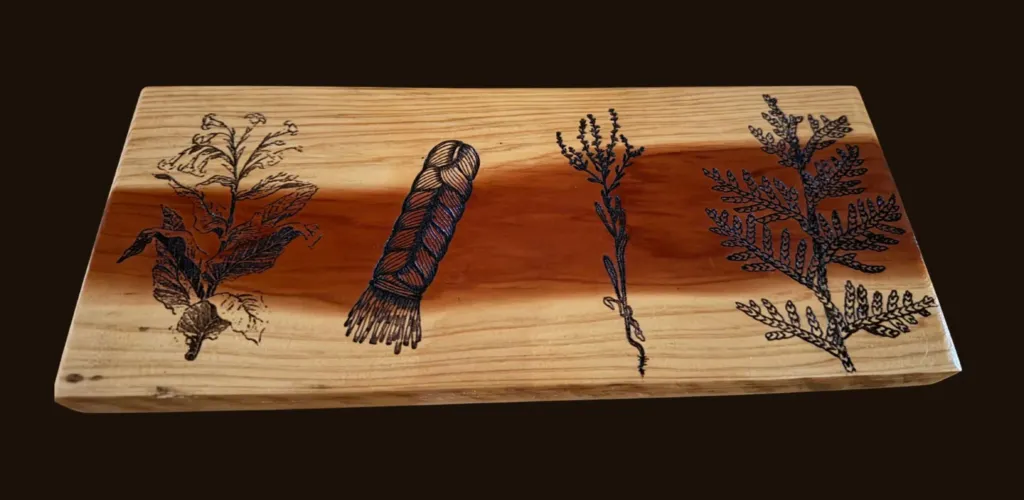
Gordon Williams, Sr., belongs to the Stockbridge-Munsee Band of Mohican Indians. His Native name, Kaakska Kweenow, means “Cedar Man.” In his words, he watches over cedar, a sacred plant with many uses in his community. People use cedar in spiritual practices, for protection and healing, and to make tea for singers and drummers.
Williams has long participated in community life on the Stockbridge-Munsee Reservation in Wisconsin. He and his sons began a family drum group in 1994, and they continue to sing together. He later took up crafting as another way to maintain and share cultural traditions.
Williams began working with wampum after someone gifted him a box of wampum shells at a gathering of the 12 Lenape tribes, which include the Stockbridge-Munsee Band of Mohicans. He values the opportunity to work with this material, which holds a place in his culture, and to share his ideas through his creations. He describes each piece as carrying something of himself.
Sacred Plants: Sage, Sweetgrass, Tobacco, Cedar
Donated to the Albany UU Collection by Vida Wehren
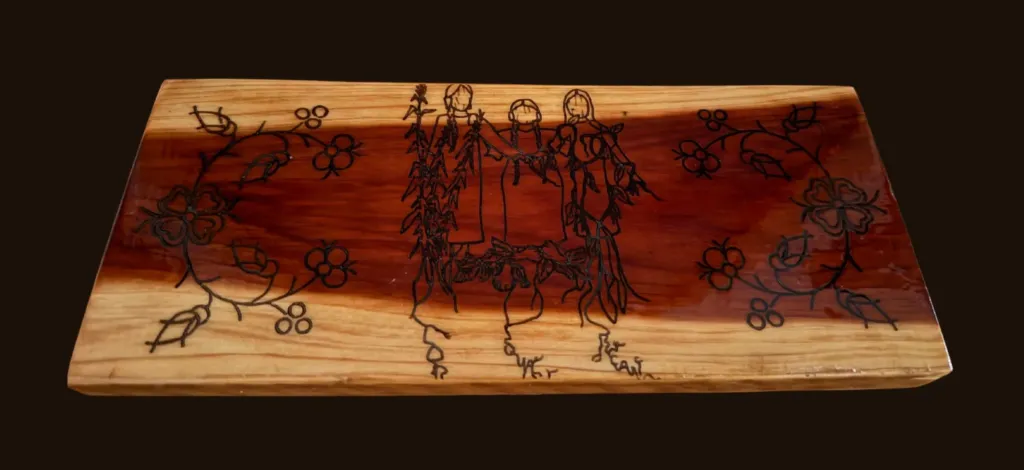
Corn, beans, and squash are known together as the Three Sisters. These crops have long-standing significance in Indigenous agriculture and food traditions.
The Three Sisters: Corn, Beans, Squash
Donated to the Albany UU Collection by Vida Wehren
Williams’s work connects artistic expression with cultural knowledge, family, community, and the traditions he continues to practice and share.